
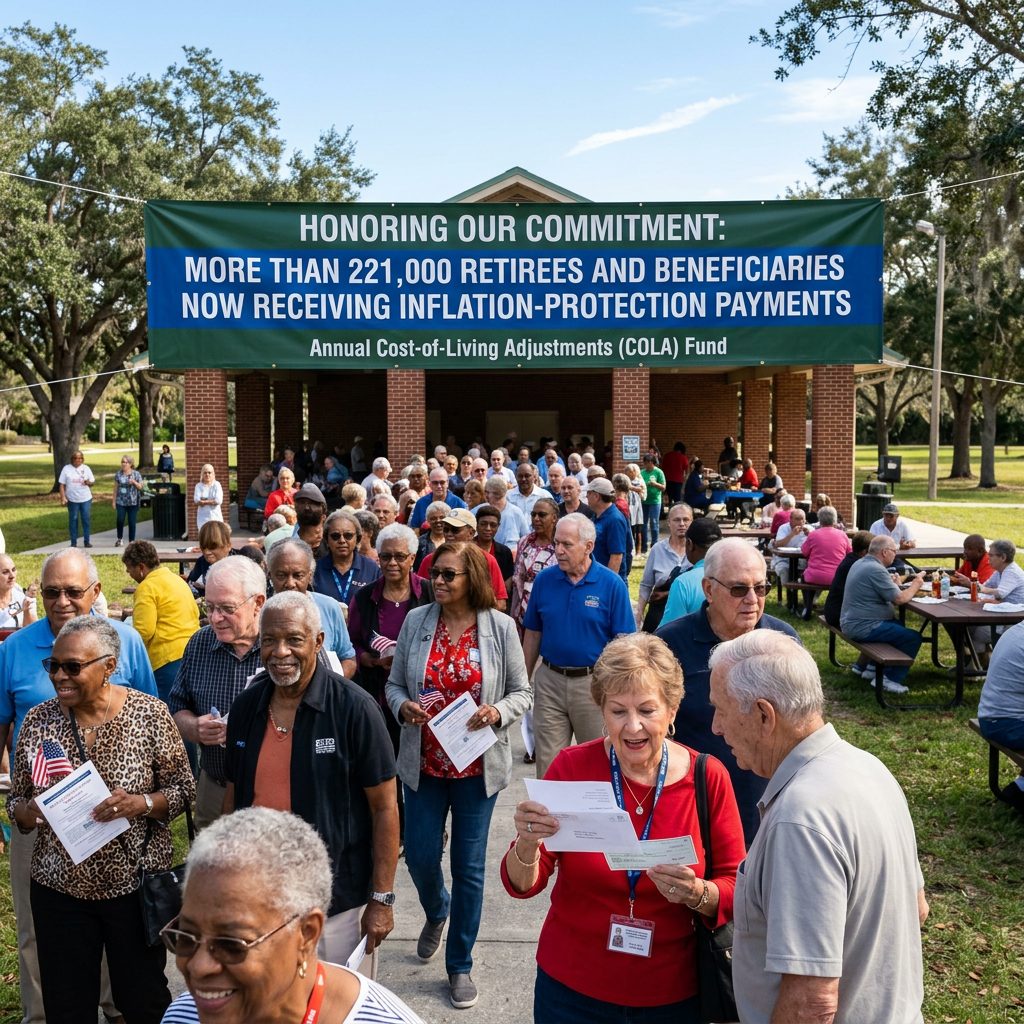

More than 221,000 retired members and their beneficiaries received inflation-protection payments in October, approximately 44,000 of them for the first time, according to Chief Executive Officer Cassandra Lichnock’s report to the Teachers’ Retirement Board. That’s an increase of nearly 20% over the number who received the payments last year.

These payments, which are from the Supplemental Benefit Maintenance Account, help retired members and beneficiaries keep up with rising costs and are in addition to monthly pension payments. The SBMA payments are distributed quarterly to help recipients maintain their standard of living by offsetting the effects of inflation.
SBMA payments help those whose purchasing power falls below 85% of their initial retirement benefit. Payments are issued on October 1, January 1, April 1 and July 1.
Inflation is generally measured by increases in the average prices of goods and services over time. As prices rise, the value of money decreases because it purchases fewer goods and services.
Another way of thinking about inflation is that it is a decline in the purchasing power of money. The higher the rate of inflation, the greater the drop in the purchasing power of money. For example, if wages remain the same and prices double, the purchasing power of those wages would buy only half as much.
CalSTRS measures the purchasing power of benefits by the change in the California Consumer Price Index (CCPI) for All Urban Consumers published by the California Department of Industrial Relations. For fiscal year 2025–26, California inflation was 3.38%.
This is the sixth consecutive year in which inflation exceeded CalSTRS’ assumed long-term inflation rate of 2.75%.
Newly eligible retired members and beneficiaries received a letter from CalSTRS confirming their SBMA eligibility. Recipients do not need to contact CalSTRS to enroll.
In total, CalSTRS paid $238.6 million in SBMA benefits to more than 221,000 retirees and beneficiaries on October 1, 2026—about 64% of all CalSTRS retirees and beneficiaries, underscoring the importance of the SBMA program.