


New entrepreneurship and innovation center expands a growing network of Lewis-supported institutions connecting education, innovation, health, policy and opportunity across Inland Empire, Southern California

RIVERSIDE, Calif. – What happens when investments in education, entrepreneurship, and community leadership begin to connect across an entire region?
For Inland Empire philanthropists Randall and Janell Lewis, the answer lies in creating opportunities that extend far beyond any single institution, program, or generation.
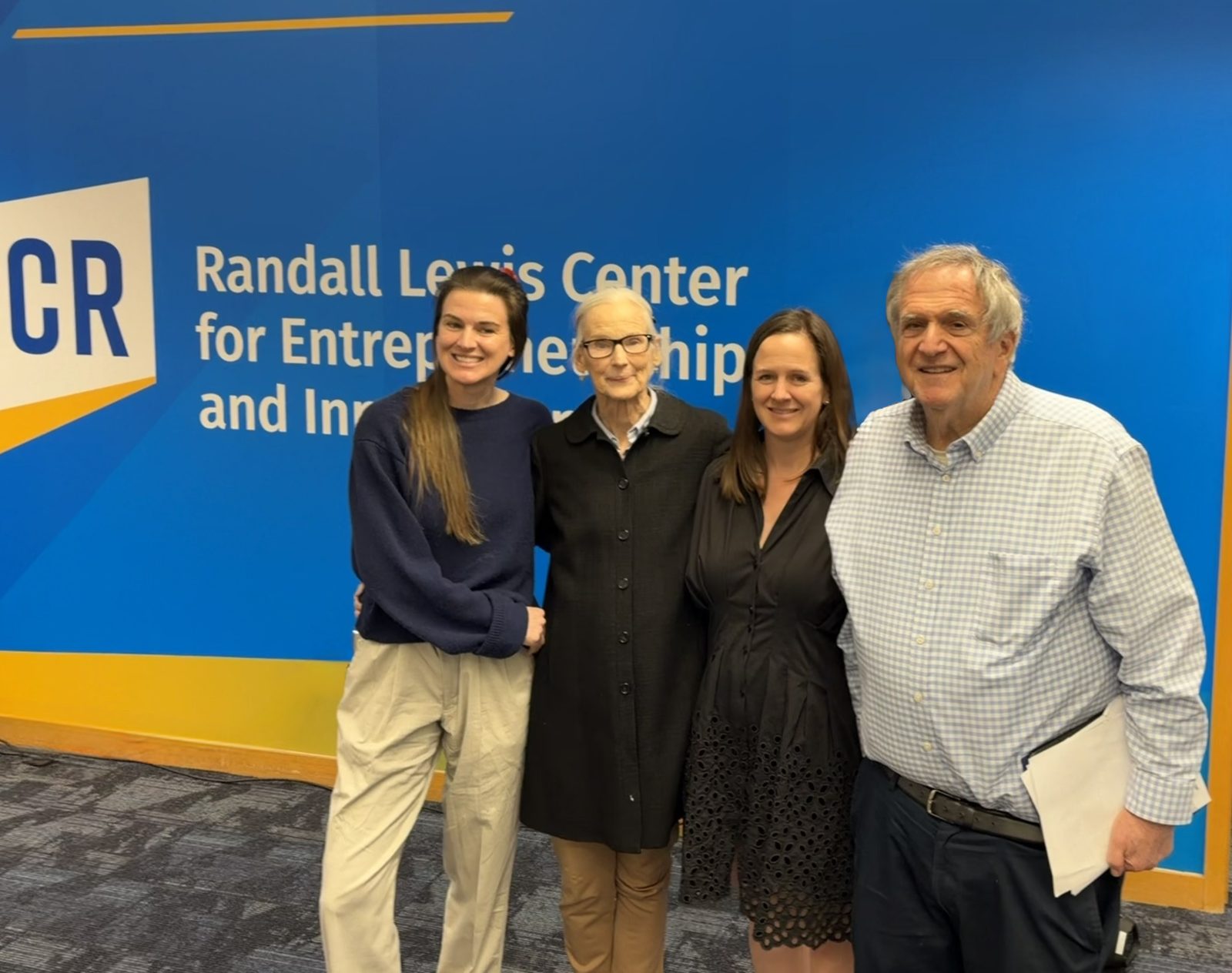
That vision took another significant step forward on November 9, when the Lewis family joined University of California, Riverside leaders and community partners to celebrate the dedication of the new UC Riverside Randall Lewis Center for Entrepreneurship and Innovation.
Made possible by a $6.2 million gift from Randall Lewis and his family, the Center will help undergraduate and graduate students across academic disciplines transform innovative ideas into businesses, nonprofit ventures, and practical solutions that contribute to the region’s economic and community well-being.
The investment represents more than the opening of a new university center. It expands a growing network of Lewis-supported institutions working to develop talent, encourage innovation, and strengthen the Inland Empire’s capacity to create its own opportunities.
“I think of this not simply as a gift, but as an investment in people, ideas, and the future of our region,” said Randall Lewis, Senior Executive Vice President of Lewis Management Corp. “We have tremendous talent here in the Inland Empire. The opportunity is to help people develop that talent, connect them with the right resources and relationships, and give them a reason to build their futures right here in our communities.”
Connecting Institutions, Expanding Opportunity
The new UCR Center joins a growing network of entrepreneurship and innovation initiatives supported by the Lewis family, including programs at California State University, San Bernardino; Claremont McKenna College; the University of La Verne; and Chaffey College.
Each institution brings its own expertise, students, partnerships, and approach to entrepreneurship. Together, they represent an opportunity to strengthen the region’s entrepreneurial ecosystem through shared learning, collaboration, and connections between students, educators, business leaders, and community organizations.
Lewis envisions greater collaboration among these institutions, including opportunities for joint summits, entrepreneurial competitions, and exchanges that bring together promising ideas and emerging talent.
“We’ve been fortunate to support some outstanding institutions, each doing important work in its own way,” Lewis said. “What excites me now is the opportunity to connect them. We don’t need every institution doing the same thing. We need to find ways for their strengths to complement each other so that, together, we can accomplish more for our students and our region.”
At UC Riverside, the new Center will provide a permanent home for entrepreneurship education, startup development, and technology commercialization on the first floor of Orbach Science Library.
Housed within the university’s Office of Research and Economic Development, it will build upon existing initiatives, including the National Science Foundation Innovation Corps (I-Corps) commercialization workshop and UCR’s INNOVAR student venture accelerator.
The Center is intended to make entrepreneurial resources more accessible to students across disciplines, helping them develop ideas into ventures while strengthening their economic opportunities.
Investing in Both Innovation and Civic Leadership
The November 9 dedication also highlighted another dimension of the Lewis family’s expanding relationship with UC Riverside.
Earlier that day, Randall and Janell Lewis met with students participating in the Randall Lewis Policy Fellows Program, an initiative supported through UCR’s Center for Community Solutions.
This second cohort of fellows are working with public agencies and nonprofit organizations across Riverside and San Bernardino counties, applying their education to challenges involving housing, homelessness, workforce development, public health, and other regional priorities.
Their work reflects a complementary approach to the family’s investment in entrepreneurship.
While the new Entrepreneurship and Innovation Center will help students develop businesses and innovative solutions, the Policy Fellows Program prepares emerging leaders to understand public policy, strengthen institutions, and help address complex community challenges.
Both initiatives connect classroom learning with real-world experience, reinforcing the relationship between education, economic opportunity, and the institutions that serve the region.
Together, they illustrate an emerging model of philanthropy in which investments in people and institutions can create opportunities for collaboration across traditional organizational boundaries.
A Family Legacy Focused on the Future
The Lewis family’s commitment to entrepreneurship and community development traces back more than 70 years to Ralph and Goldy Lewis, whose business and community involvement helped establish the family’s roots in the Inland Empire.
Randall and Janell Lewis have continued that legacy through philanthropic investments spanning education, healthcare, entrepreneurship, sustainability, public policy, and community well-being.
Their support has helped establish and sustain centers, schools, fellowships, research initiatives, and community partnerships throughout Inland Southern California.
Among these investments are initiatives focused on entrepreneurship and innovation, healthy aging, public policy leadership, sustainability, and community health.
Although each serves a distinct purpose, they share a broader philosophy: lasting community progress depends on strong institutions, capable leaders, meaningful partnerships, and opportunities for people to improve their lives.
The Lewis family’s approach emphasizes strengthening existing organizations and encouraging collaboration rather than creating a separate structure to direct their work, a philosophy reflected in efforts to highlight the contributions of partner institutions, share their successes, and encourage connections that can amplify their collective impact.
Building the Region’s Capacity for Generations to Come
For the Inland Empire, the significance of the new Center extends beyond entrepreneurship education.
It reflects a larger question about the region’s future: How can communities cultivate and retain their own talent, translate innovation into economic opportunity, and build the institutional capacity needed to address tomorrow’s challenges?
The Lewis family’s investments offer one approach — supporting institutions that prepare future leaders, connect knowledge with practice, and create pathways for students and communities to succeed.
The next chapter will be shaped not only by the accomplishments of individual centers, but by the opportunities that emerge as their students, faculty, entrepreneurs, public agencies, and community partners increasingly connect.
“Our hope is that these investments will continue to grow in value as people and institutions build upon them,” Lewis said. “The real measure of success isn’t simply what we establish today. It’s what students, entrepreneurs, and community leaders are able to accomplish tomorrow, and the opportunities they create for others along the way.”