

By Nicole Chang

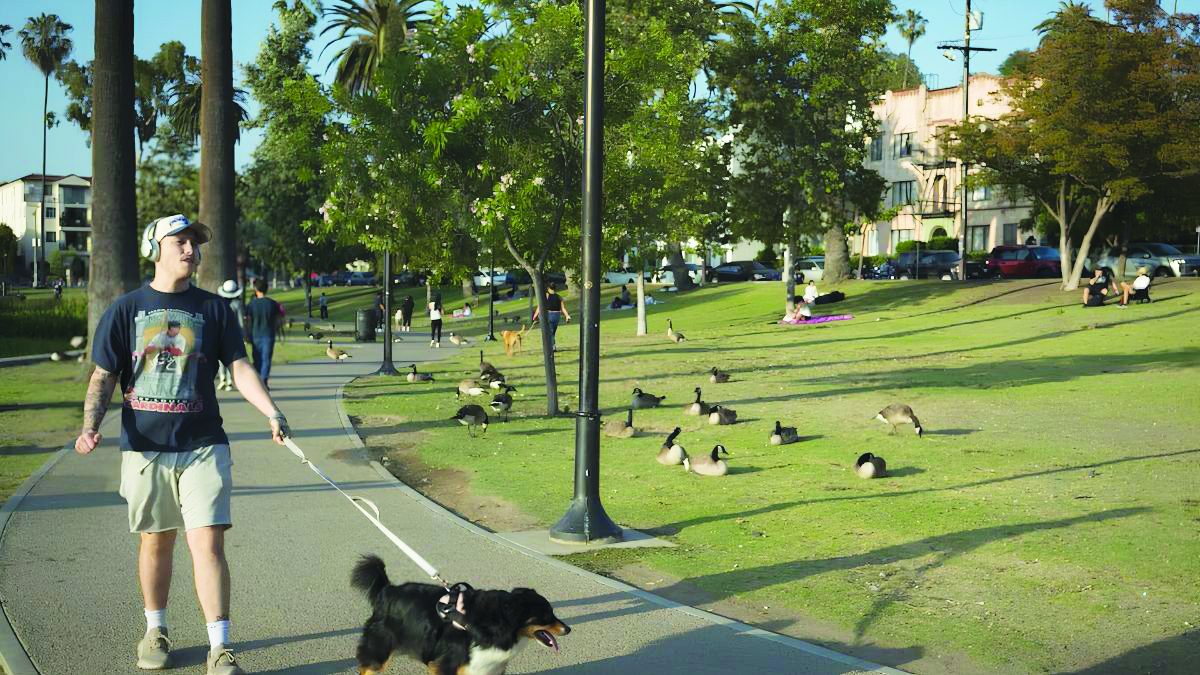
“By 2036, every Los Angeles resident should have access to safe, clean parks close to home. Right now, about one million Angelenos don’t have a park within walking distance. We should cut that number in half over the next 10 years.”
Jon Christensen, director of LENS at UCLA’s Institute of the Environment and Sustainability, outlined that goal in a Nov. 6 interview with American Community Media (ACoM).
Christensen helped advance Measure PRK, which Los Angeles voters overwhelmingly approved in the Nov. 3 election. He participated in the city’s park needs assessment, efforts to secure funding and the campaign for the measure.
Measure PRK will double the minimum funding allocation required for the Los Angeles Department of Recreation and Parks over the next decade without imposing new taxes. Instead, it increases the share of existing property tax revenue dedicated to parks.
According to the Los Angeles County Registrar-Recorder/County Clerk, the measure received 78.7% of the vote, compared with 21.3% against, as of the evening of Nov. 6. The 761,627 yes votes were more than three times the number of no votes.
The minimum funding allocation will increase from 0.0325% of assessed property values to 0.065% by fiscal year 2036-37. City projections estimate that the annual parks budget could rise from approximately $303 million to $995 million over that period.
Christensen called the measure an opportunity to reform a funding system that has remained largely unchanged since the 1930s. He emphasized the importance of investing in underserved neighborhoods, particularly densely populated areas such as Koreatown.
Measure PRK passed with nearly 79% of the vote. Did you expect such overwhelming support?
Over the past year, we talked to thousands of Angelenos and found strong support for parks across all demographic groups and neighborhoods. We were confident the measure could pass, but the result still surprised me. Our biggest concern was that voters might mistake it for a tax increase. The ballot language didn’t clearly explain that Measure PRK doesn’t create a new tax or raise tax rates. So we spent months communicating that it changes how existing property tax revenue is allocated. We believed that once voters understood that we had a good chance of winning.
What does the result mean for Los Angeles? You previously described the measure as a “once-in-a-century opportunity.”
It shows that Angelenos recognize parks as essential to their health, safety and quality of life. In the 1920s and 1930s, Los Angeles established dedicated funding for parks and libraries because they were considered essential to building a great city. In a country of immigrants, these are places where people from different backgrounds come together, understand one another and build community. Los Angeles has since fallen into the 90s in national park rankings among America’s 100 largest cities, largely because of inadequate funding and unequal access. Measure PRK addresses both problems. It gives us the financial foundation to rebuild a strong, equitable park system. The vote is also a reaffirmation of the city’s commitment to public spaces nearly a century ago.
Koreatown has limited parks and green space despite its high population density. What improvements could residents expect?
Koreatown is a good example of the city’s inequitable park system. There are some parks, but not nearly enough space for the number of residents. The additional funding can help create new parks or expand existing ones. We should also make better use of public land. One option is community schoolyard parks, where schoolyards are opened to residents on weekends and after school hours. We don’t always have to buy new land. Existing public facilities can help provide more recreational space in neighborhoods like Koreatown.
How soon will residents see improvements, and what should the city prioritize?
I expect changes within the first year, and certainly within two or three years. One immediate priority is rebuilding the department’s workforce. Since the 2008 financial crisis, it has lost full-time and part-time staff, making it difficult to maintain parks and provide services. Additional funding can support hiring, maintenance, lighting, safety improvements and repairs to aging facilities. I think phasing in the money over 10 years is an advantage. The department can expand staffing and services carefully rather than trying to spend a large amount all at once. Priorities also change. For example, parks now need to serve as resilience centers during extreme heat events. That wasn’t something we were talking about 20 years ago.
How can the city ensure that funding reaches underserved communities and is spent effectively?
The city’s Park Needs Assessment is the most important accountability tool. Thousands of residents helped identify their neighborhoods’ needs, and the assessment provides a roadmap for future investments. It includes measures of equity and access that should guide funding priorities. Residents now have a way to evaluate whether the Department of Recreation and Parks is addressing those needs. The department’s annual reports and oversight by the Board of Recreation and Park Commissioners will also be important. The assessment needs to be updated over time to reflect changing community needs.
Mayor-elect Nithya Raman has been a strong supporter of parks, and I expect her administration to emphasize accountability and measurable progress. But residents also have a responsibility to pay attention and speak up when improvements aren’t happening.
Critics warn that dedicating more property tax revenue to parks could affect other services, including public safety and homelessness programs. How do you respond?
The funding allocated to the Department of Recreation and Parks under this measure cannot be used for other purposes. The department will still go through the annual budget process with the mayor and City Council to determine spending on staffing, maintenance and new facilities. And this will, of course, require some belt-tightening in other areas in order to prioritize parks, but it is still a small portion of the overall budget. There is also a provision allowing the city to reduce funding increases but to 30% during a serious financial crisis, as long as the funding doesn’t fall below the existing guaranteed 0.0325% of assessed property values. But money allocated to parks cannot simply be transferred to another department.
What can we expect Los Angeles parks to look like in 2036?
We should have clean, safe, well-lit parks, with good programs for children and adults. Recreation centers, senior centers and swimming pools should be providing the services communities need. Los Angeles currently has nearly $3 billion in deferred park maintenance. We may not eliminate that entire backlog within 10 years, but the most urgent repairs should be completed, and there should be a plan for the rest. Equitable access is especially important. About one million Angelenos don’t have a park within walking distance. I think we can cut that number to 500,000 by 2036 and have a plan to serve the remaining residents. We should see new parks and community schoolyard parks in neighborhoods that have historically lacked adequate recreational space.
You have spent years advocating for Measure PRK. Now that it has passed, what will your role be over the next decade?
Until now, our goal was to get the measure passed. Our job now is to make sure it’s implemented properly. I plan to continue working with park advocates, the Department of Recreation and Parks and city officials to ensure the funding addresses residents’ needs. People should expect improvements and speak up if they don’t see progress. At the same time, fixing problems that have accumulated over decades will take time. We also need residents, nonprofits and community organizations to help support our parks. This election has given us the opportunity. Now we have to turn that opportunity into reality.