


By Edward Kissam

Andres (we are only using his first name because of the sensitivities of his case) is an emergency room doctor in the first year of his residency. He works in an urban hospital in the San Francisco Bay area which, like most, is chronically understaffed.
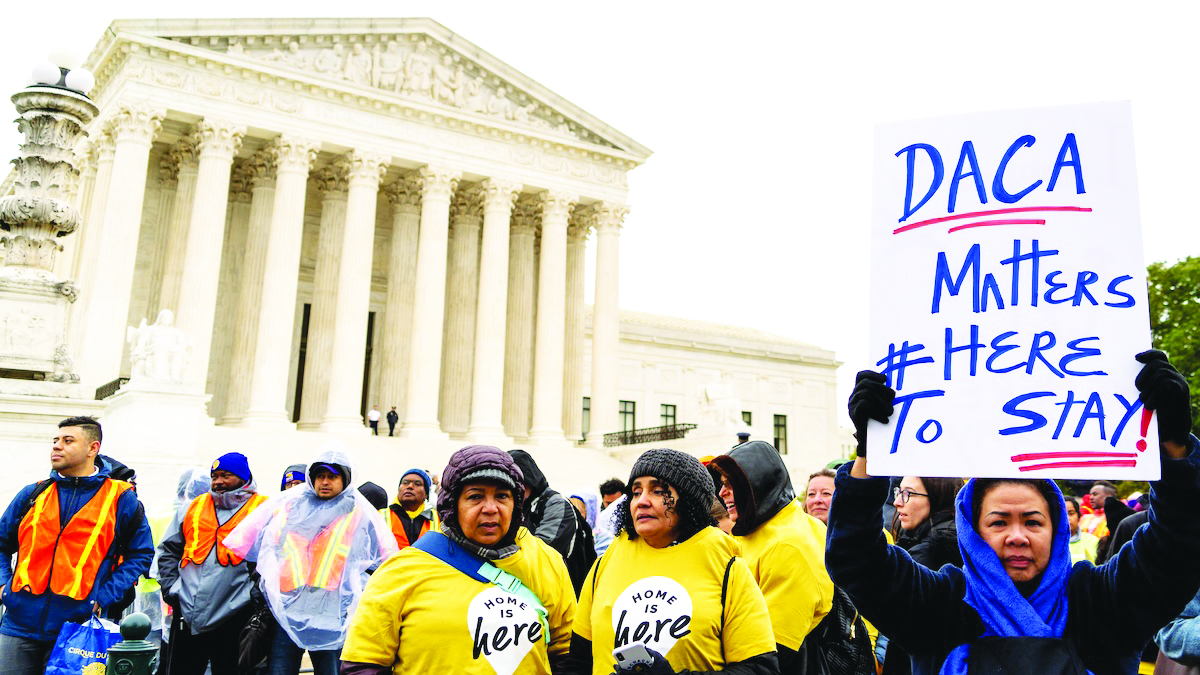
He is also among a growing number of DACA recipients across the country whose renewal applications are being delayed — some say intentionally.
“At first I thought it would come through,” said Andres, who submitted his DACA renewal application soon after Thanksgiving last year. “After 2 weeks I began to realize that it might not come through. The more time you have to think things over the worse it gets. I forgot who I was.”
United States Citizenship and Immigration Services (USCIS), the federal agency that oversees DACA, advises beneficiaries to submit their renewal applications 4-5 months before expiration. But the routine renewals that once took just 2 months to process are now taking as long as 6-7 months. Any application submitted more than 5 months before expiration, moreover, may be rejected.
For people with DACA, the delays are more than just a bureaucratic hiccup. They threaten their status in the country, and with it, their ability to work and earn a living.
In Andres’ case, he did everything right, filing for extension as advised and paying the $555 extension fee. Seven months later he’s still waiting for a response from USCIS. In the meantime, his work authorization expired in early March, prompting his employer, a major health care institution, to suspend him from work.
The experience has disrupted his life. “Even though they give us a chance to be someone, they can still take it away,” he said.
While the administration attributes the delays to stricter screening and background checks, advocates argue the White House is intentionally slow walking processing of DACA renewals.
The move, they argue, is part of a broader strategy aimed at detaining and deporting immigrants without generating the kinds of public outcry seen in cities like Minneapolis, where two U.S. citizens were killed by federal immigration agents during Operation Metro Surge in late 2025.
The president’s approval on immigration — long his strongest issue alongside the economy — has steadily eroded since the events in Minneapolis. A Gallup poll last year also found that an overwhelming majority (85%) of Americans, including 71% of Republicans, support legislation to provide DACA recipients a pathway to citizenship.
“I can’t see how it’s not intentional,” Sen. Alex Padilla (D-Calif.) told Politico. “In previous years, we’d get maybe a dozen cases” of DACA recipients left waiting for their renewals. Now “it’s in the hundreds.”
The consequences for individual DACA recipients are severe. An immigrant who works without authorization can be deported and may even face a permanent bar to securing legal status. Employers, meanwhile, face both civil and criminal charges for keeping someone without work authorization on payroll.
The consequences for the U.S. labor market are equally dire. Among the more than half a million DACA recipients, around half are college educated, often working in key positions in health care, agriculture, construction, the hospitality industry, scientific research, and the U.S. military.
Marking the 14th anniversary of DACA, the American Business Immigration Coalition (ABIC) — a bipartisan coalition of more than 1,700 employers — sent a letter to Congress and the Trump administration highlighting the renewal delays.
“The administration is quietly but deliberately forcing highly vetted, highly skilled, and long-term DACA holders out of the workforce,” said ABIC CEO Rebecca Shi during a recent press conference. “This is not only cruel, but it hurts American businesses and drives up prices for everyday Americans.”
The costs to the country’s health care system are no less damaging. The American Medical Association estimates that about 27,000 health care workers are DACA recipients. Among these, at least 200 are medical residents working very long hours in hospitals across the country. Even a brief lapse in these physicians’ work authorization can wreak havoc in already-understaffed hospitals.
“About 10% of our staff are DACA recipients,” said Deborah Herbert of Monte Vista Grove Homes, an assisted living center in Pasadena, CA. She was among 140 CEO’s who wrote a letter to Congress earlier this month explaining how DACA authorization delays hurt her business.
“Delays in approving DACA work authorizations are forcing us to remove DACA recipients from the work schedule,” Herbert continued. “We are finding it extremely difficult and often impossible to hire new employees fast enough to fill the gaps. So care for older adults is being directly affected and current employees are working double shifts.”
She concluded, “This level of strain is not sustainable for caregivers, residents, and the organization.”
Then there is the personal toll.
“You don’t want to drive anywhere because things might escalate,” said Andres, who has lived in the US since first arriving here with his parents from Mexico at two years old. “You always have to look around over your shoulder to see who’s behind you.”
Andres knows he isn’t the only one in his family impacted. His brother, also a health care worker, submitted his own DACA renewal application one week after Andres, in mid-December. Four months later he, too, was laid off. While his renewal finally arrived in June, he remains out of work.
Andres says the experience brought him back to when he was graduating high school.
“I needed financial aid to go to college,” he recalled. “My mother told me I couldn’t because I didn’t have an SSN (Social Security Number) … I got depressed and had no energy to do anything.”
Edward Kissam is a leading researcher and advocate for strategies to deal with health issues impacting immigrant communities. He has led research on farmworker and immigrant issues sponsored by the Department of Labor, the Commission on Agricultural Workers, and the National Institute for Food and Agriculture, among others.