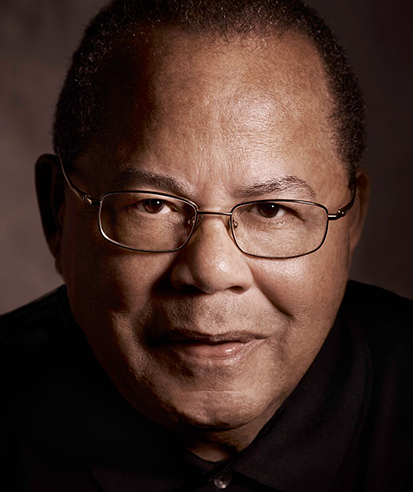

Craig J. DeLuz | California Black Media

Editor’s Note: The views and opinions expressed in this commentary are those of the author and do not necessarily reflect the views, positions, or editorial stance of California Black Media, its publisher, editors, or affiliates.
Some politicians believe making any promise loudly and confidently is an adequate substitute for only supporting proposals that are realistic or implementable.
California’s gubernatorial race has produced a bumper crop of them.
Tom Steyer, the billionaire liberal donor turned candidate, has called for abolishing ICE and jailing its agents, describing the federal law enforcement agency as a “violent extremist group.”
Former Los Angeles mayor Antonio Villaraigosa compared ICE officers to members of the Ku Klux Klan, and State Superintendent of Public Instruction Tony Thurmond promised to have ICE agents arrested.Former HHS Secretary Xavier Becerra vowed to “police the immigration police.”
These are all the leading candidates to become governor of the most populous state in the union.
One might ask: can they actually do any of this? The answer, rooted not in opinion but in two centuries of constitutional law, is no. And yet the question almost never gets asked; because the performance is the point.
Steyer’s plan reads more like a campaign message than a governing blueprint. That is not an accident. Under the Supremacy Clause of Article VI of the U.S. Constitution, and under longstanding Supreme Court precedent, states may not criminally prosecute federal officers for actions taken in the lawful course of their federal duties, provided the officer reasonably believed those actions were necessary to fulfill that duty. This is not an obscure technicality. It is the foundational architecture of American federalism, and it has been settled law for longer than most of these candidates have been alive.
The legal test is not complicated. Was the officer authorized by federal law to be there and act? Did the officer reasonably believe the action was necessary to perform that duty? If the answer to both is yes, the state prosecution cannot proceed. Full stop. And if a state’s Attorney General or a regional district attorney were reckless enough to try anyway, the Department of Justice can move the case to federal court, where federal supremacy immunity applies — and the state prosecution is barred entirely.
Steyer’s plan pledges to give the state Attorney General authority to hold ICE leadership accountable for violence, and to pursue “supervisory liability” to criminally prosecute not just agents but their supervisors — without explaining how any state law could supersede federal authority.
It cannot. The candidates know this — or should. Their lawyers certainly do.
What we are witnessing, then, is not a legal strategy. It is a political one. The incentive structure of the California Democratic primary runs in one direction: toward more confrontation with federal enforcement, more public spending on illegal immigrant legal defense, and more inflammatory language about ICE.
This has predictable consequences beyond the campaign trail. When a leading candidate for governor calls ICE a “criminal organization” engaged in “terrorism,” it does not just shape a primary. It shapes the way state employees, local police, and community organizations interact with federal law enforcement. It signals that obstruction is not just tolerated — it is the official position of the state’s aspiring leadership.
Economist and cultural commentator Thomas Sowell noted that “it is hard to imagine a more stupid or more dangerous way of making decisions than to put those decisions in the hands of people who pay no price for being wrong.”
California’s gubernatorial candidates have crafted a remarkable variation on this theme: they have found a way to make promises they know they cannot keep, at a cost they will never personally bear, to audiences who may never learn the difference.
The Supremacy Clause does not care about a press release. Federal supremacy immunity does not bend to a debate stage applause line. And the U.S. Constitution was not amended during the California primary season. The irony is particularly rich in the case of Xavier Becerra, who served as California’s Attorney General (the state’s chief law enforcement officer) before vowing to “police the immigration police.” One might expect a man who once swore to uphold the rule of law to have at least a passing familiarity with the Supremacy Clause. Apparently, the learning did not take.
ICE responded simply.
“ICE is not a political football. Our agents and officers are sworn to protect this nation from dangerous criminals ranging from child abusers to cartel members,” the agency said. It is a statement that required no legal scholarship, no constitutional footnotes, and no grandstanding — which may be precisely why it went largely unreported.
The voters of California are being asked to choose between candidates competing to make the boldest promises about powers they do not have, against a federal government whose legal authority they cannot override. What they are not being asked — but ought to be — is a simpler question: If your signature proposal cannot survive its first day in court, what exactly are you offering?
The answer, in most cases, is a feeling. And feelings, unfortunately, are not subject to the Supremacy Clause.
About the Author
Craig J. DeLuz, has almost 30 years of experience in public policy and advocacy. He hosts a daily news and commentary show called “The RUNDOWN.” You can follow him on X at @CraigDeLuz.