
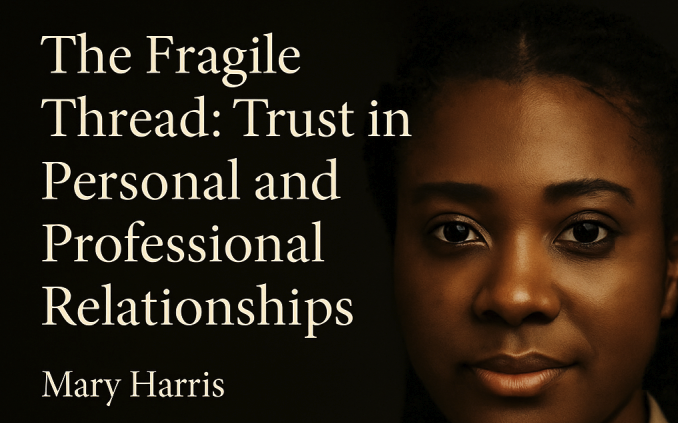

By Mary Harris/Publisher of The San Bernardino American News
In an era where connections span continents and conversations happen at the speed of light, one timeless element remains at the heart of every meaningful relationship—trust. Whether in the quiet intimacy of personal bonds or the calculated structures of professional environments, trust is the invisible thread that holds relationships together. Once broken, it is painstaking to mend; once earned, it must be carefully preserved.
Trust in Personal Relationships: The Emotional Currency
In our personal lives, trust is the foundation on which love, friendship, and family stand. It’s built over time through consistency, vulnerability, and empathy. We open up to those we trust, revealing our fears, failures, and dreams. Without this emotional security, relationships become performative and fragile—like houses built on sand.
But trust is not blind. It is strengthened by transparency and mutual respect. When one partner lies, even about small things, the betrayal can ripple far beyond the initial transgression. Rebuilding that trust requires honesty, remorse, and patience—often more than we realize.
More importantly, trust demands a two-way street. It’s not just about being trustworthy, but also about choosing to trust others. Insecurity and fear can erode relationships just as quickly as dishonesty can. Sometimes, the hardest part is letting go of control and choosing to believe in someone else’s integrity.
Professional Trust: The Engine of Collaboration
In the workplace, trust is just as vital—though often less discussed. We tend to focus on performance, productivity, and strategy, but ignore the cultural glue that holds teams together. Trust allows teams to innovate, take risks, and admit mistakes without fear of humiliation. It creates psychological safety—a rare and precious asset in competitive environments.
Leaders who micromanage or withhold information undermine trust. On the flip side, employees who fail to meet expectations or act without accountability erode confidence from the bottom up. Trust in professional settings is not about personal closeness but about reliability, competence, and integrity.
Crucially, organizations that invest in building trust—through clear communication, consistent values, and fair practices—see stronger retention, better morale, and higher performance. Distrust, by contrast, breeds toxicity, gossip, and silent resignation.
The Common Thread
Whether personal or professional, trust requires time to build, moments to test, and just seconds to destroy. The challenge lies in its intangibility—there are no metrics to measure trust, no shortcuts to create it, and no guarantees that it will last. And yet, it’s the most critical investment we can make in our relationships.
We must begin by being trustworthy ourselves. That means honoring our commitments, being honest even when it’s uncomfortable, and owning our mistakes. In both spheres of life, trust is not a given—it is a gift, renewed with every action and word.
In the end, it’s not the contracts we sign or the vows we take that sustain our bonds. It’s the quiet, everyday choices that say: You can rely on me.
Published only in The San Bernardino American Newspaper